The Business Journal of Film, TV Broadcasting, Broadband, Production, Distribution

June/July 2015
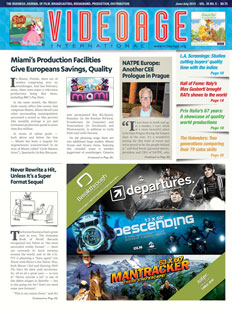
MIPCOM Listings Coming Soon
Other Languages
Connect With Us


Cover Stories
Never Rewrite a Hit, Unless It’s a Super Format Sequel
 The format business had a great year in 2014. The Guinness Book of World Records recognized Got Talent as “the most successful reality format” — there are currently 67 local versions around the world, and in the U.K. ITV is planning a “born again” Got Talent with Planet’s Got Talent. more»
Audio Version (a DV Works service)
L.A. Screenings in Dollars and Cents.
The Event Only Makes Sense For a Few
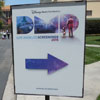 It is well known that the L.A. Screenings are large revenue sources for all of the major U.S. studios, mini-majors and big Latin TV groups, while for some of the indies the Screenings are valuable mainly for cultivating relationships with buyers. more»
Audio Version (a DV Works service)
Hall of Fame: In 1964, Max Gusberti’s Issues Were Residuals, Pricing RAI TV Programs
 In the early 1960s, when Massimiliano (Max) Gusberti was hired by Italy’s state broadcaster, RAI, to run its nascent international program sales division, then called SACIS (which became RaiTrade and now Rai Com), he faced several unprecedented issues. more»
Audio Version (a DV Works service)
My Two Cents
 The digital possibilities are endless. It could replace print. It could replace TV trade shows. It could replace traditional program distribution. … But until that time comes, print trades will still be the favorite and most effective marketing tool at markets, and for now, I, for one, find it too time-consuming to consult digital market guides. more»
Audio Version (a DV Works service)

Welcome To VideoAge!
The first thing that you’ll notice is that, with a simple search, you have access to the full spectrum of our industry: From A (as in Advertising) to Z (as in TV Poland executive Zak).
To us at VideoAge, television is more than an industry; it is a universe of stars (vice-presidents) superstars (CEOs) and quasars (chairmen) from the world of politics, regulations, sociology, psychology, finances, production, distribution, ratings, broadcasting, cablecasting, satellite, piracy, new technology, etc., including the good ’ole days.
VideoAge makes complex new technological topics digestible to non-geeks and rich technophobes. more»

Water Cooler
Check out the Water Cooler, the coolest weekly news report in the business.
Tweets by @VideoAge